

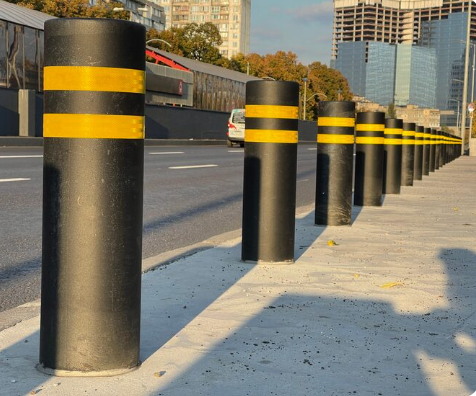
A flexible bollard sign post is a practical solution for businesses that need to improve traffic control, pedestrian safety, and sign visibility around their property. Designed to withstand accidental impacts while helping keep signs clearly visible, flexible bollard sign posts are useful in parking lots, driveways, commercial entrances, loading areas, and other high-traffic locations.
For business owners, choosing the right sign post is about more than displaying information. The right system can help direct drivers, identify restricted areas, highlight pedestrian zones, and make important safety messages easier to see.
What Is a Flexible Bollard Sign Post?
A flexible bollard sign post combines the protective function of a bollard with the visibility and communication benefits of a sign post.
Unlike rigid posts that can bend, break, or become permanently damaged after an impact, flexible bollard posts are designed to flex or move when struck and return toward their original position.
This makes them particularly useful in areas where vehicles frequently maneuver close to signs.
Common applications include:
- Parking lots
- Commercial driveways
- Shopping centers
- Business entrances
- Warehouses
- Industrial facilities
- Apartment communities
- Hotels
- Restaurants
- Construction areas
- Pedestrian crossings
- Loading zones
- Private roads
- Traffic-control areas
Why Businesses Use Flexible Bollard Sign Posts
Business properties often have areas where vehicles and pedestrians share limited space. A clearly visible sign can help communicate parking restrictions, directional information, warnings, and other important instructions.
A flexible bollard sign post can provide several advantages.
1. Improved Visibility
Placing a sign on a dedicated bollard post can position important information at an easily noticeable height.
Businesses can use signs to communicate:
- No parking
- Reserved parking
- Fire lane restrictions
- Loading zones
- Pedestrian crossings
- Speed limits
- Directional instructions
- Private property notices
- Accessible parking information
- Safety warnings
Clear signage can help drivers understand expectations before they enter or move through a particular area.
2. Impact Resistance
Traditional rigid sign posts can be vulnerable to accidental vehicle strikes.
A flexible post is designed to tolerate impacts better by bending or flexing instead of remaining completely rigid.
This can be especially valuable in:
- Tight parking spaces
- Drive-through areas
- Busy parking lots
- Delivery zones
- Loading areas
- Narrow driveways
- High-traffic commercial properties
3. Lower Maintenance Requirements
When a rigid post is hit, it may become bent, damaged, or require replacement. A flexible design can reduce the likelihood of permanent damage from minor impacts.
This may help businesses reduce maintenance interruptions and the need for frequent post replacement.
4. Enhanced Safety
A well-positioned sign can make hazards, restrictions, and traffic instructions more visible.
For business owners, the combination of a visible sign and impact-resistant post can help create a more organized property environment.
5. Professional Appearance
Signage is also part of a property’s appearance.
A properly installed flexible bollard sign post can provide a clean and organized way to display traffic and safety information without relying on temporary cones or makeshift solutions.
Key Features of a Flexible Bollard Sign Post
When comparing flexible bollard sign posts, business owners should evaluate the features that affect durability, visibility, installation, and long-term performance.
Flexible Construction
The primary feature is the ability of the post to flex after an impact.
Depending on the product, the post may use a flexible polymer, engineered plastic, rubber-like material, or another impact-resistant construction.
High-Visibility Design
Many flexible bollard posts are available in highly visible colors such as:
- Bright yellow
- Orange
- Red
- White
- Black and yellow combinations
High-visibility colors can help the post stand out against pavement, buildings, landscaping, and other surroundings.
Reflective Elements
Reflective bands or materials can improve visibility in low-light conditions.
This can be particularly useful for businesses that operate during:
- Early mornings
- Evenings
- Overnight hours
- Poor weather conditions
Sign Compatibility
A flexible bollard sign post should be compatible with the type and size of sign your business needs.
Before purchasing, check:
- Sign dimensions
- Mounting method
- Hardware requirements
- Post diameter
- Mounting height
- Weight limitations
Durable Materials
Outdoor sign posts must withstand exposure to weather, sunlight, temperature changes, moisture, and everyday traffic.
Look for materials designed for outdoor applications and confirm the manufacturer’s specifications for UV resistance and weather durability.
Flexible Bollard Sign Post vs. Rigid Sign Post
| Feature | Flexible Bollard Sign Post | Rigid Sign Post |
|---|---|---|
| Impact resistance | Designed to flex | Typically remains rigid |
| Accidental vehicle contact | May return toward original position | Can bend or break |
| Visibility | Can use high-visibility materials | Depends on design |
| Maintenance | Potentially lower after minor impacts | May require repairs after impacts |
| Safety applications | Excellent for many traffic areas | Suitable for stable locations |
| Appearance | Modern and highly visible | Traditional |
| Best use | Parking and high-traffic areas | Areas with lower impact risk |
The right choice depends on the property’s traffic patterns, installation requirements, sign type, and local regulations.
Where Should a Flexible Bollard Sign Post Be Installed?
Placement is critical to both safety and visibility.
Business owners may consider installing flexible bollard sign posts near:
Parking Spaces
Use signs to identify reserved spaces, parking restrictions, customer areas, or traffic directions.
Pedestrian Areas
Posts can help draw attention to pedestrian crossings and areas where vehicles should slow down.
Driveways
Directional and warning signs can help drivers navigate entrances and exits.
Loading Zones
Signs can identify areas reserved for deliveries and help prevent unauthorized parking.
Fire Lanes
Businesses can use appropriate signage to clearly identify restricted areas, subject to local requirements.
Building Entrances
A sign post can communicate traffic flow, parking instructions, or safety information near busy entrances.
How Flexible Bollard Sign Posts Improve Safety
Safety signage works best when people can see and understand it quickly.
A flexible bollard sign post can contribute to a safer commercial environment by combining visibility, positioning, and impact resistance.
For example, a business could install a high-visibility post with a directional sign near a parking-lot entrance. Drivers can identify the sign more easily, while the flexible construction can provide additional protection if a vehicle accidentally contacts the post.
Businesses should still follow applicable building, traffic, accessibility, fire-safety, and signage regulations when selecting and installing posts.
How to Choose the Right Flexible Bollard Sign Post
Before purchasing, consider these factors.
1. Determine the Application
Start by identifying where the post will be installed.
Is it for:
- A parking lot?
- A warehouse?
- A storefront?
- A pedestrian area?
- A loading zone?
- A private driveway?
The application will influence the ideal post design.
2. Consider Traffic Levels
A post installed in a busy commercial parking lot may require different characteristics than one installed beside a low-traffic walkway.
Consider the number of vehicles, vehicle types, turning patterns, and proximity to the sign.
3. Choose the Right Height
The sign should be positioned so that drivers and pedestrians can easily see it without creating an obstruction.
4. Select a High-Visibility Color
Bright colors can make posts easier to identify during the day.
For additional nighttime visibility, consider reflective elements where appropriate.
5. Check Installation Requirements
Different products use different mounting systems.
Review:
- Surface type
- Base design
- Anchoring requirements
- Required tools
- Installation depth
- Hardware
6. Verify Sign Compatibility
Make sure the post can safely support the intended sign.
7. Consider Local Requirements
Certain signs and installations may be subject to local codes, accessibility requirements, fire regulations, or traffic-control standards.
Businesses should verify applicable requirements before installation.
Benefits for Business Owners
Investing in a flexible bollard sign post can provide practical benefits beyond basic signage.
Safety Benefits
- Improves sign visibility
- Helps communicate traffic instructions
- Identifies restricted areas
- Can increase awareness around pedestrian zones
- Helps organize vehicle movement
Operational Benefits
- Can withstand certain accidental impacts
- May reduce replacement needs
- Works well in high-traffic environments
- Can provide a permanent alternative to temporary signage
Appearance Benefits
- Creates a consistent signage system
- Gives parking areas a more organized appearance
- Provides a professional presentation
- Can make important signs easier to identify
Maintenance Tips
Even durable flexible bollard sign posts should be inspected regularly.
Business owners can periodically check for:
- Cracks
- Loose hardware
- Damaged signs
- Faded colors
- Missing reflective material
- Loose bases
- Obstructions around the post
Clean the post and sign when necessary to maintain visibility.
If a post has sustained significant damage or no longer returns to its intended position after an impact, inspect or replace it according to the manufacturer’s recommendations.
Flexible Bollard Sign Post FAQs
1. What is a flexible bollard sign post?
A flexible bollard sign post is an impact-resistant post designed to support signage while allowing the post to flex when contacted by a vehicle or other object.
2. Why should a business use a flexible bollard sign post?
Businesses can use flexible bollard sign posts to improve sign visibility, communicate safety information, organize traffic, and provide a more impact-resistant signage solution.
3. Are flexible bollard sign posts suitable for parking lots?
Yes. They are commonly suited to parking lots because vehicles frequently maneuver around parking spaces, entrances, exits, and traffic lanes.
4. Can a flexible bollard sign post withstand vehicle impacts?
Many flexible designs are engineered to tolerate accidental impacts better than rigid posts. However, performance varies by product, so businesses should review the manufacturer’s impact and durability specifications.
5. Are flexible bollard posts better than rigid posts?
Neither is universally better. Flexible posts can be advantageous in areas with a higher risk of accidental impacts, while rigid posts may be appropriate for locations where flexibility is unnecessary.
6. Are flexible bollard sign posts visible at night?
Visibility depends on the product. Models with reflective bands or reflective sign materials can improve nighttime visibility.
7. What colors are available?
Common high-visibility options include yellow, orange, red, white, and combinations of contrasting colors. Availability depends on the manufacturer.
8. Where can flexible bollard sign posts be used?
They can be used in parking lots, commercial properties, warehouses, pedestrian areas, loading zones, driveways, and other locations requiring visible signage.
9. How do I install a flexible bollard sign post?
Installation depends on the product and surface. Some models use surface-mounted bases and anchors, while others use different mounting systems. Follow the manufacturer’s installation instructions.
10. Do flexible bollard sign posts require maintenance?
Routine inspection is recommended. Check the post, base, sign, reflective elements, and mounting hardware periodically for damage or wear.
11. Can businesses customize the signs?
Some products can accommodate different sign sizes, messages, colors, or mounting configurations. Check the specifications of the specific product.
12. How do I choose the best flexible bollard sign post?
Consider the installation location, traffic level, post height, material, visibility, impact resistance, sign compatibility, mounting system, and applicable local requirements.
Conclusion
A flexible bollard sign post can be an effective addition to commercial properties where safety, visibility, and durability are priorities. By combining a highly visible sign with an impact-resistant post, businesses can communicate important information while creating a more organized traffic environment.
For business owners, the best product should match the property’s specific needs. Consider traffic conditions, sign requirements, visibility, installation method, durability, and local regulations before making a purchase.

Mathew Hicks is a world-renowned author and expert in the field of business and finance. He has written multiple books and articles on the subject and has been featured in numerous publications. His expertise has been sought by leading financial institutions around the world.